Dark circles and morning puffiness don't respond to guesswork — the right under eye serum for dark circles and puffiness depends on what's actually causing the shadow, and most people are treating the wrong problem.
- Caffeine-gel serums work fastest on puffiness — look for same-morning depuffing, not overnight miracles.
- Vitamin K and arnica target vascular dark circles; vitamin C targets pigment-based ones — they are not interchangeable.
- Fragrance-free formulas matter more here than anywhere else on your face because under-eye skin is thinner and reacts faster.
- Skip serums built for the whole face — most contain actives too strong for the eye area at full strength.
- An under eye serum for dark circles and puffiness only works if you match the formula type to the actual cause, in 2026 or any year.
Why this matters
Most people buy an eye serum, use it for ten days, see nothing, and assume all eye serums are marketing. That's usually a mismatch problem, not a product problem. Puffiness is fluid retention. Dark circles can be pigment, thinning skin showing blood vessels underneath, or both. One serum rarely fixes both mechanisms at once.
The skin under your eyes is noticeably thinner than skin on the rest of your face, which is exactly why blood vessels and pigment show through as darkness in the first place. A formula built for cheeks and forehead is often too aggressive for that thinner tissue, and a formula too gentle won't move the needle on puffiness at all. If you're shopping for clean, small-batch skincare in general, the same ingredient-transparency standard Rooted for Good applies to face creams applies here — read the ingredient list, not the marketing copy on the jar.
Who this is for
This guide is for anyone dealing with a persistent shadow or puff under the eyes that concealer keeps creasing into by noon — people who've tried a drugstore roller and a fridge-chilled eye cream and still see the same tired reflection. It's written for both the person whose circles are genetic and vascular, and the person whose puffiness is mostly sleep, salt, and allergies. The buying decision changes depending on which camp you're in, and the sections below tell you how to tell the difference.
What to look for in an under eye serum for dark circles and puffiness
Caffeine or peptide concentration for puffiness
Caffeine constricts blood vessels temporarily, which is why it's the go-to ingredient for morning puffiness rather than long-term dark circle correction. Peptides work slower, supporting collagen over weeks rather than hours. If puffiness is your main complaint, a serum needs a meaningful caffeine percentage listed high on the ingredient list, not buried after water and fillers.
Vitamin K and arnica for vascular circles
Dark circles caused by visible blood vessels respond best to vitamin K and arnica, both traditionally used to reduce the appearance of bruising and pooled blood under thin skin. If your circles look bluish or purple rather than brown, this is the ingredient pair to prioritize over brightening actives.
Fragrance-free formulation built for the eye area
The eye area reacts faster and more visibly than the rest of your face — irritation here shows up as puffiness and redness, which defeats the entire purpose of the product. A true eye serum should be fragrance-free and formulated at a lower active concentration than face serums, even when it shares an ingredient name with your daytime moisturizer.
Absorption time before makeup
A serum that sits on the surface for ten minutes before it absorbs isn't compatible with a real morning routine, and it will pill under concealer. Look for a lightweight gel or fluid texture that absorbs in under a minute so it doesn't fight with the rest of your routine.
Packaging that protects potency
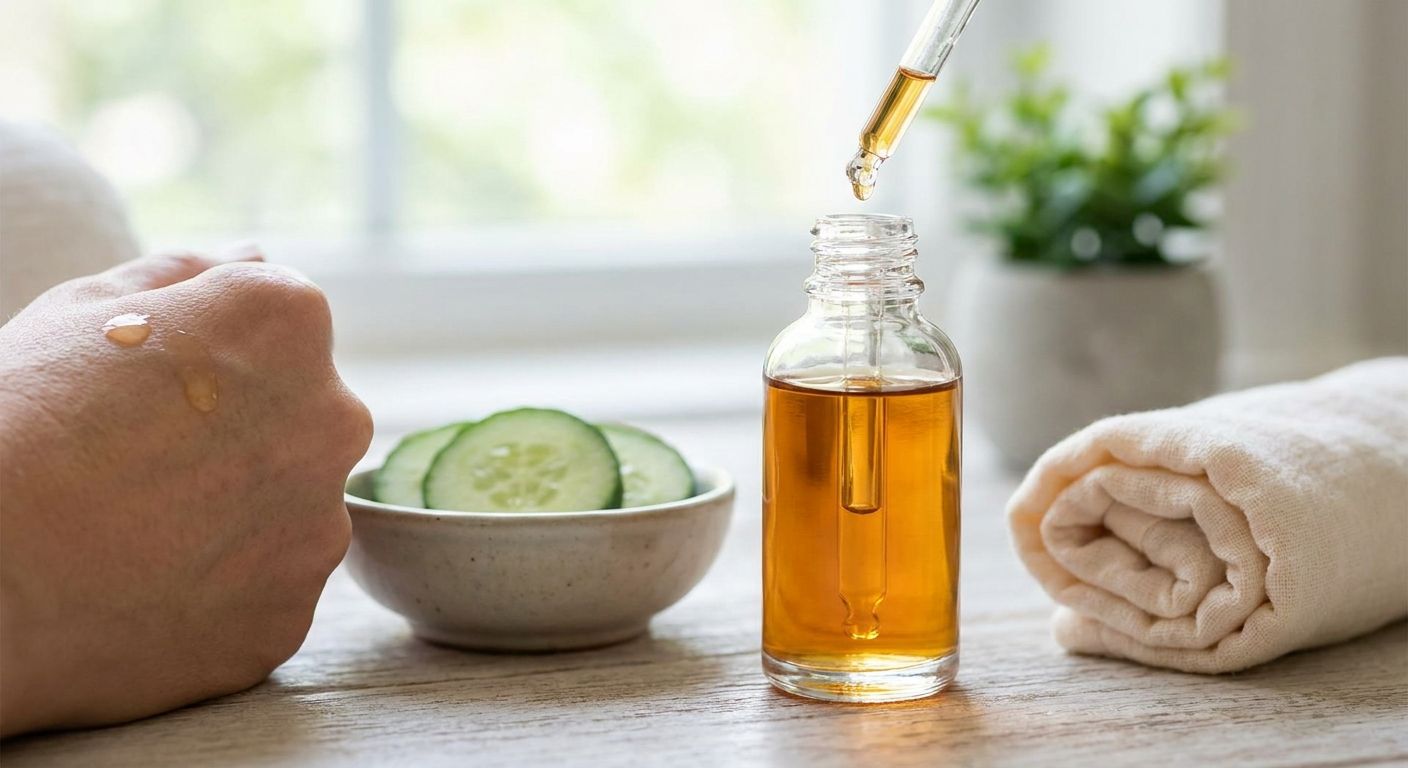
Caffeine, vitamin C, and peptides all degrade with light and air exposure. Airless pumps or opaque glass with a dropper protect the actives far better than open jars, which matters more for a product you're applying twice a day for months.
Price per use versus small-batch freshness
A cheaper serum in a large jar that oxidizes by month two is a worse deal than a smaller-batch formula you finish before it degrades. Small-batch skincare brands typically formulate in shorter runs specifically to keep actives fresher through the bottle's life — worth factoring into cost per use, not just sticker price.
The formulas worth trying in 2026
Caffeine gel serum — the fast fix. Most caffeine eye gels list caffeine in the top five ingredients and are designed for daily morning application under makeup. Expect visible depuffing within the same session, not overnight transformation. Buy if your main issue is morning puffiness from fluid retention or poor sleep.
Vitamin C brightening serum — the tone corrector. Formulated at lower strength than face-serum vitamin C, this targets pigment-based darkness rather than vascular shadows. It takes weeks of consistent use to show a tone shift, not days. Consider it if your circles are brown rather than blue-toned — skip it if your circles are clearly vascular, since vitamin C won't touch blood-vessel visibility.
Peptide and bakuchiol serum — the long game. Peptides support collagen production over time, and bakuchiol is the common retinol-alternative for the eye area because it's gentler on thin skin. Results build over four to eight weeks of nightly use, not overnight. Buy for age-related hollowing and fine lines around the eyes, especially if straight retinol has irritated you before.
Vitamin K and arnica cream — the bruise fighter. Built specifically for vascular dark circles, this pairing is closer to a targeted treatment than a general brightener. It won't do much for puffiness on its own. Consider it if your circles look bruised or bluish and you've ruled out pigment as the main cause.
Hyaluronic acid hydrating serum — the hydration base. This plumps fine lines temporarily by pulling moisture into the skin, which softens the appearance of shadows without correcting the underlying cause. Buy as a layering base under a targeted caffeine or vitamin K formula — skip it as a standalone fix if pigmentation or vascular darkness is your actual problem.
What to avoid
- Serums marketed as "instant" tightening fixes. These usually rely on film-forming ingredients that create a temporary taut feeling and do nothing for pigment or vascular circles once they wear off.
- Full-strength retinol borrowed from a face serum. The eye area is thinner and more reactive; a retinol percentage that's fine on your cheeks can cause flaking and redness under the eyes within days.
- Heavily fragranced "luxury" eye creams. Fragrance is one of the most common irritants in the eye area specifically, and irritation there reads as puffiness, which is the opposite of the goal.
Verdict comparison
| Formula type | Best for | Time to see results | Verdict |
|---|---|---|---|
| Caffeine gel serum | Morning puffiness | Same session | Buy |
| Vitamin C serum | Pigment-based circles | 4-6 weeks | Consider |
| Peptide + bakuchiol | Aging, hollowing | 4-8 weeks | Buy |
| Vitamin K + arnica | Vascular circles | 3-4 weeks | Consider |
| Hyaluronic acid | Hydration base layer | Immediate, temporary | Buy as layer, skip alone |
Puffiness and hormonal shifts often show up together — if you're also dealing with cyclical bloating or mood swings, the ingredient logic overlaps with what's covered in PMS mood swings and cramps. And if your under-eye puffiness coincides with broader hormonal skin changes, menopause skin changes covers the wider pattern worth understanding.
Sleep-deprivation-driven dark circles are common enough postpartum that it's worth reading up on postpartum skin recovery alongside your eye routine — the two often need attention at the same time. If your under-eye skin is reactive in general, the same sensitivity logic in rosacea-prone skin applies to picking a fragrance-free eye formula.
FAQ
What's the best under eye serum for dark circles and puffiness?
There's no single best formula because dark circles and puffiness have different causes — caffeine gel serums work fastest for puffiness, while vitamin K and arnica target vascular dark circles. Match the active to your specific cause rather than picking by marketing claims.
Is vitamin C or caffeine better for dark circles?
Vitamin C works better for brown, pigment-based dark circles, while caffeine is better for puffiness and temporary vessel constriction. If your circles are bluish rather than brown, vitamin C alone won't do much.
How long does it take an eye serum to work?
Caffeine-based serums can visibly reduce puffiness within the same application, but pigment and vascular correction from vitamin C, peptides, or vitamin K typically takes 4-8 weeks of consistent use. Judge results at the one-month mark, not the one-week mark.
Can I use my face serum around my eyes?
Not recommended at full strength — the skin under your eyes is thinner than skin on the rest of your face and reacts faster to active ingredients like retinol. Use a formula specifically diluted or formulated for the eye area.
Do natural or fragrance-free eye serums work as well as synthetic ones?
Fragrance-free formulas generally cause less irritation around the eyes, which matters more for results than whether the ingredient source is synthetic or natural. Irritation itself causes puffiness and redness, undoing whatever the active ingredient was supposed to fix.
Why do my dark circles look worse in the morning?
Overnight fluid pooling and lying flat both worsen puffiness and can make dark circles look more pronounced by morning. A caffeine-based serum applied right after waking addresses this specific pattern faster than a nighttime-only routine.
Should I use an eye cream and an eye serum together?
Yes — a lightweight serum with a targeted active like caffeine or vitamin K layered under a hydrating cream covers both the correction and the hydration base. Apply the serum first and let it absorb before the heavier cream.
Are under eye serums worth it in 2026 compared to a cheap eye cream?
A serum formulated with a real percentage of an active ingredient like caffeine or vitamin K will outperform a generic hydrating eye cream for actual dark circle or puffiness correction. If the cream's ingredient list buries actives after water and fillers, the serum is the better investment.
One last thing
The most overlooked factor isn't the active ingredient — it's application pressure. Rubbing or tugging thin under-eye skin to apply product can worsen the appearance of both puffiness and fine lines over time, regardless of what's in the bottle. Pat with a ring finger, work outward from the inner corner, and give the formula thirty seconds before layering concealer on top.